Hey all you entrepreneurs, check out the OpenCoffee Club! It combines two of my favorite things, expresso and startups! The OpenCoffee Club was founded to establish regular meeting places where investors and entrepreneurs can meet in an informal setting. It’s great for networking, getting advice, or possibly even get funding for your latest hair-brained scheme! It’s still growing, and as such locations are limited, but go check it out here.
Category Archives: Education
Using Aluminum to separate hydrogen from water
Researchers at Purdue have come across an interesting way of generating hydrogen. They use aluminum’s affinity for oxygen to split up water molecules, resulting in aluminum oxide and pure hydrogen gas, which can then be used in a fuel cell to generate electricity. The key is they add gallium to the aluminum first, and the gallium hinders the formation of the aluminum oxide skin that would normally develop and limit any further oxidation. With an aluminum-gallium alloy, all of the aluminum will quickly oxidize, maximizing its usefulness in this application. The waste products are gallium and aluminum oxide, each of which may be recycled and reused for this application.
While a novel approach to generating hydrogen, I haven’t yet seen an analysis of how much energy needs to be put into this process for a given amount of hydrogen. Producing the aluminum takes quite a bit, then of course every time you convert aluminum oxide back to aluminum will take yet more energy. However, it does meet one of the goals of the emerging hydrogen economy, and that is to develop a means of storing energy in a portable device like a car. It’s completely safe, too – little to no hydrogen need be stored in the car, just the aluminum-gallium pellets, and a tank of water.
One downside is that the range using this process isn’t fantastic – they estimate you’d get around one mile per pound of aluminum-gallium pellets being carried.
You can read more over at Physorg.com.
Lighting Design Guide
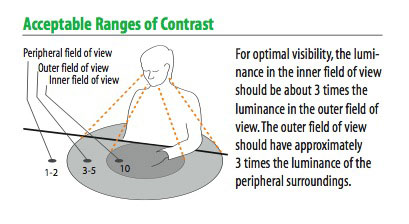 Sunnex has a neat design guide, in the form a free downloadable PDF, that shows some good design guidelines for task lighting. I’ve never designed a lamp before, but we did at one point consider altering the design for the Cruiser to perform this function (the LEDs it uses currently are more for communication and interaction). (via Core77)
Startup-oriented job posting board
There’s a million websites out there with job postings, it seems. Some cater to all genres (Monster.com), others are extremely specific (ProE Job Network). Somewhere in the middle lies nPost.com, a job board geared towards startups. The listings seem decent, though not comprehensive; it’s narrow focus makes it worth including in any job search. Well, assuming you’re after the startup lifestyle, that is! One other nice feature is the interview section, where they interview key figures in various startups.